Building robust, scalable applications on the JVM. Here I share technical insights into software architecture and the integration of AI into modern systems.

Konstantin Pavlov
Software Engineer
Featured

Integration Testing on the JVM: My Ideal Process, End to End
Master robust integration testing for JVM web services. Learn how to simulate databases, Kafka, and LLMs with Testcontainers and Mokksy for fast, parallel …

Spring Boot starters
This post discusses Spring Boot Starters and their importance to developers, who want to make the setup and configuration of Spring Boot applications a whole …

Code review best practices
Code review is a crucial practice in software development. One can design and write great software, but we are humans after all. And all humans make mistakes, …
Recent

Tachyon MCP 1.0 is here!
The reasons behind Tachyon MCP 1.0 and its design: a standalone Netty server, ordinary Java handlers, a Kotlin DSL, support for two MCP versions, and tasks …

Tachyon MCP: A Spec-Forward Java Runtime for the MCP Ecosystem
Tachyon is a standalone Java MCP server built on Netty — no framework required, with first-class protocol extensions, virtual-thread handlers, and a stateless …
Integration Testing on the JVM: My Ideal Process, End to End
Master robust integration testing for JVM web services. Learn how to simulate databases, Kafka, and LLMs with Testcontainers and Mokksy for fast, parallel …
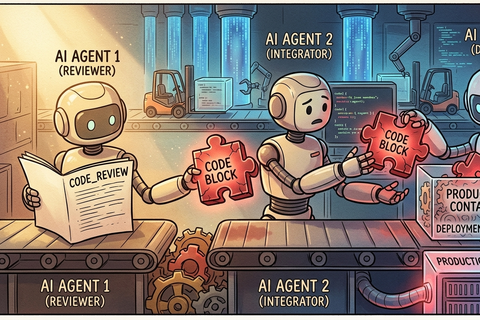
Higher-Order Attacks on AI Code Agents
Direct prompt injection is just the beginning. Higher-order attacks manipulate agents into producing malicious code, propagating intent across systems, and …

When Your AI Code Agent Becomes an RCE Engine
If your AI code agent treats repository content as instructions, any contributor can execute commands. This article maps the direct injection attack surface and …